Livestock Development and Value Chains
Lead: Programmes Department
Budget: KES 120,000,000
Flagship Programme
Programme Overview
Improving livestock productivity, animal health surveillance, breed improvement, and commercialization of milk and meat value chains.
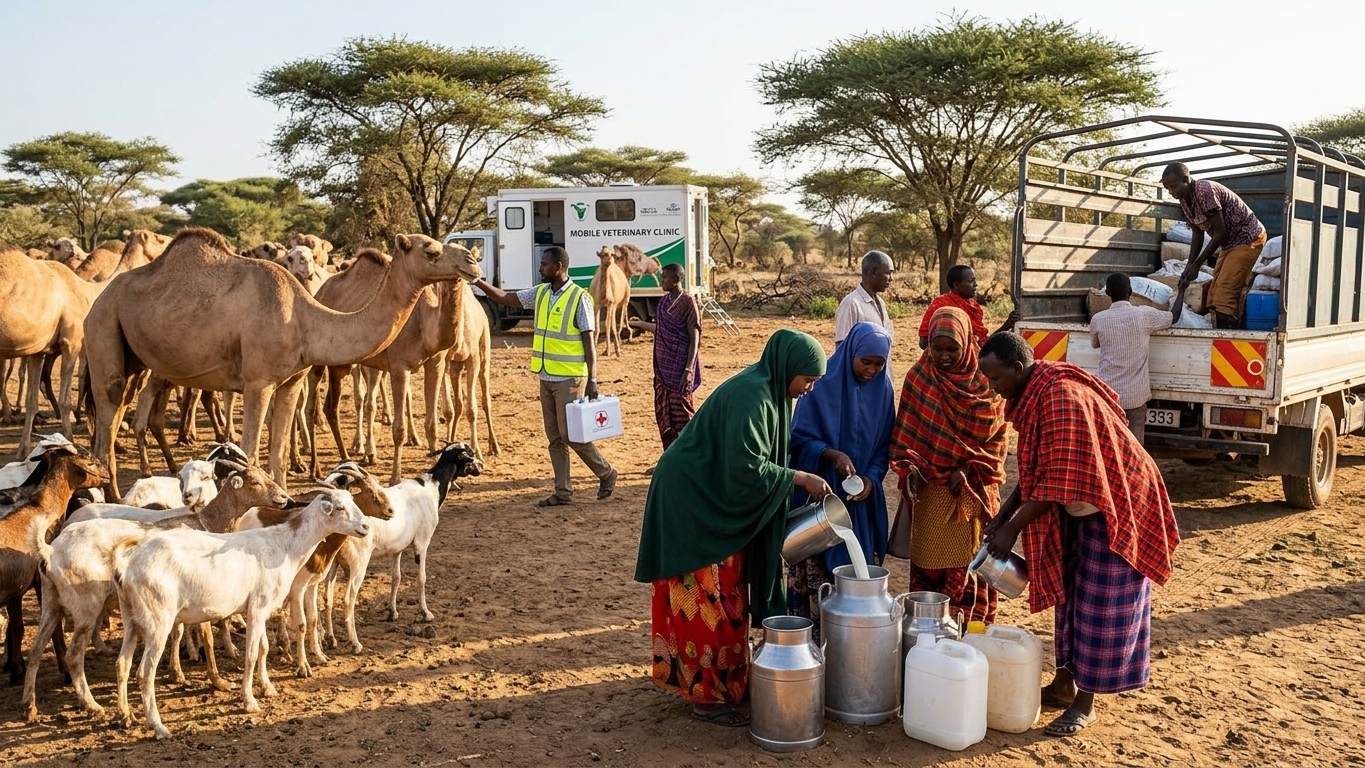
Livestock production underpins household income, food security, culture, and trade across Samburu and Northern Kenya. The Resilient Livestock Programme optimizes livestock systems through community-led breeding, prophylactic veterinary extension, animal health surveillance, fodder reserves, and structured market links.
By transitioning from subsistence pastoralism to commercialized, high-value pastoral livestock production, households significantly reduce mortality during climate shocks while expanding household incomes.
Strategic Objectives
- ✓ Improve livestock productivity and health status across ASAL herds
- ✓ Expand market access and value addition for camel milk, dairy, and meat products
- ✓ Establish community disease surveillance and cold-chain veterinary supplies
Key Interventions & Activities
Breed improvement and climate-tolerant genetics
Animal health networks and disease surveillance
Pasture and fodder production reserves
Livestock marketing cooperatives and digital market intelligence
Camel, dairy, and poultry value chains
Expected Outputs & Deliverables
- ★ Improved livestock productivity and weight gain
- ★ Livestock mortality during drought reduced by at least 30%
- ★ Household income from livestock trade increased
Programme Factsheet
Pillar Number:
Pillar 01
Classification:
Flagship Programme
5-Year Budget:
KES 120,000,000
Lead Operational Unit:
Programmes Department
Beneficiaries:
Pastoral households, producer cooperatives, pastoral youth herders, and livestock traders in Samburu County.